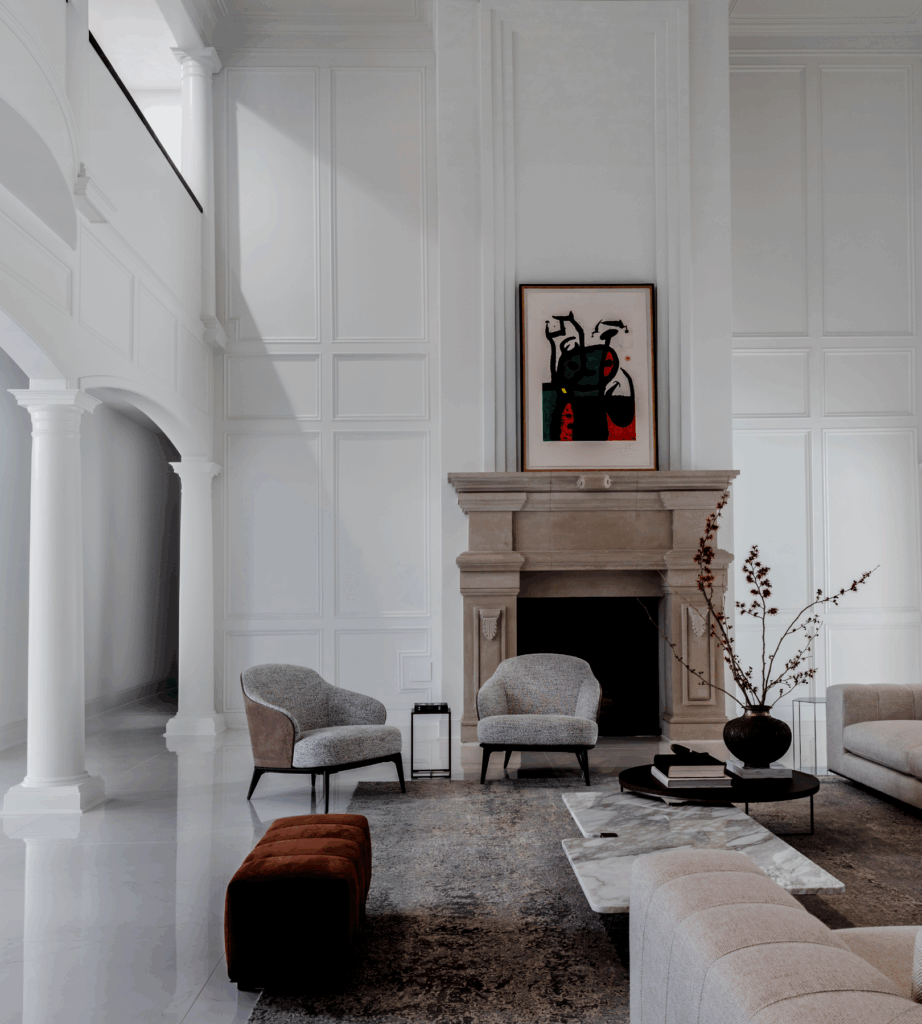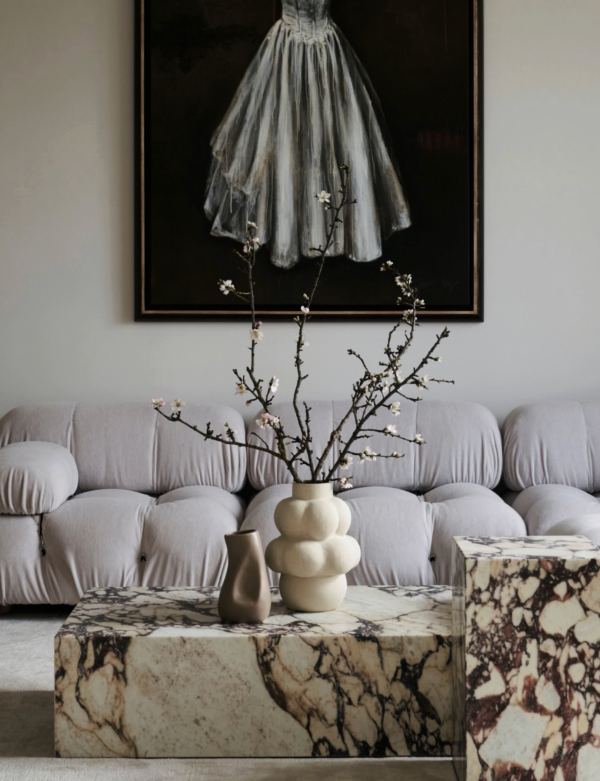
When we think of a home, we often associate it with comfort. But comfort extends far beyond plush textures and quiet corners. It is the feeling of exhale. Of arriving at a space that allows you to soften, slow down, and feel fully present. True luxury has evolved into something more personal. The way sunlight travels across your floor. The sound a cabinet makes when it closes. The layout that silently supports your daily rhythm.
After the pandemic, we all began to look at our spaces differently. Our homes became our havens, and that shift reshaped the very definition of wellness. A home that restores you not just physically, but emotionally and energetically has become the new standard. That is what we now consider a wellness sanctuary.
Designing for wellness isn’t about following a single aesthetic. It’s about shaping a deeper emotional experience that unfolds through thoughtful form, intuitive flow, and materials that speak to the senses. From the surfaces that ground you to the light that carries you into each new day, every detail plays a role in how a space feels. When design honors the body and the mind in equal measure, each room becomes a quiet extension of wellbeing.
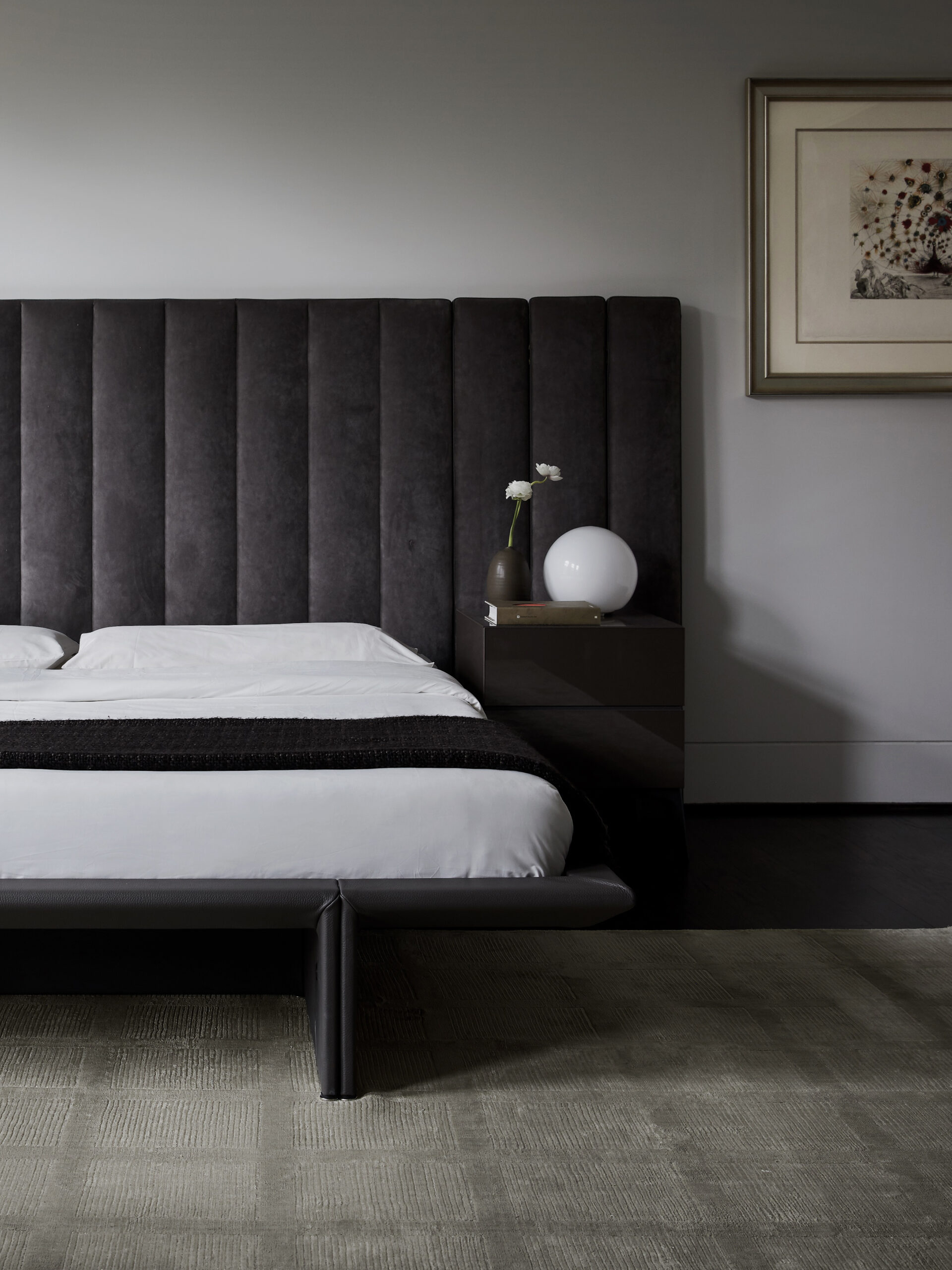
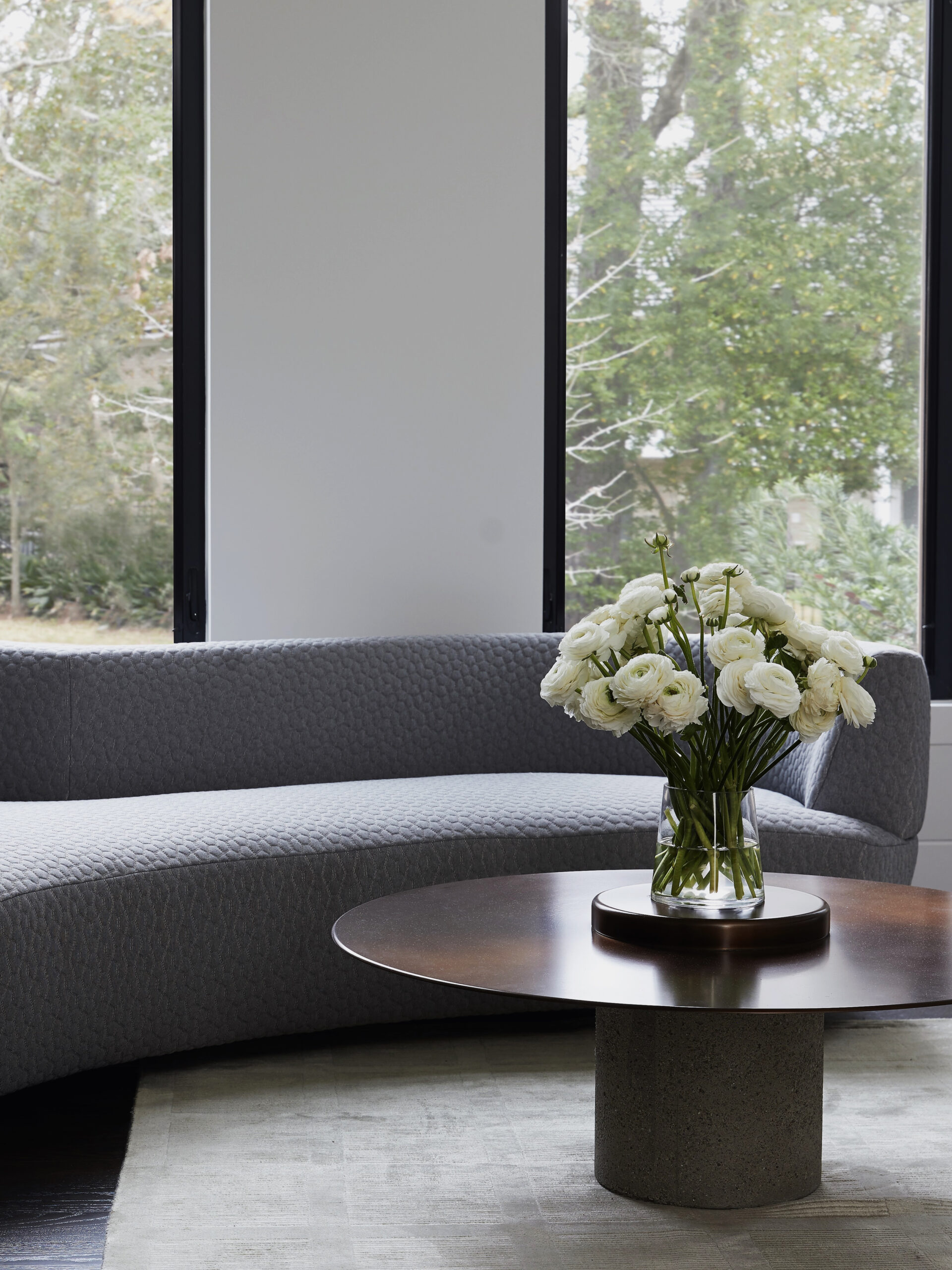
The bedroom is often the most personal space in a home, and yet it’s one of the last rooms people tend to prioritize when it comes to design. In reality, this is where wellness should begin. The bedroom deserves an atmosphere that invites deep rest, and that begins with the way the space is shaped. Avoid unnecessary furniture that clutters movement or interrupts the visual calm. Choose soft finishes with tactile variation, like plush textiles layered over sculptural nightstands. This balance creates a sense of sensory ease that anchors the room without overpowering it.
In our Bunker Hill Village residence, the bedroom was designed to be a space that supports both rest and presence. A velvet-wrapped headboard introduces dimension without adding visual weight. Pale wool rugs soften the floors while offering gentle contrast beneath darker furnishings. The seating area is deliberately integrated, giving the room purpose beyond sleep and encouraging moments of stillness throughout the day. Lighting was calibrated to the body’s natural rhythm, with filtered daylight welcomed through large windows and warm, low-profile fixtures guiding the mood into the evening. Together, these elements create a room that invites restoration without removing vitality. Nothing is excessive and everything is intentional.
This kind of detail doesn’t simply look beautiful, it supports better sleep, encourages mindfulness, and minimizes overstimulation. That’s how wellness begins to feel lived-in and not decorative. It moves through the room, guiding each choice quietly but intentionally.
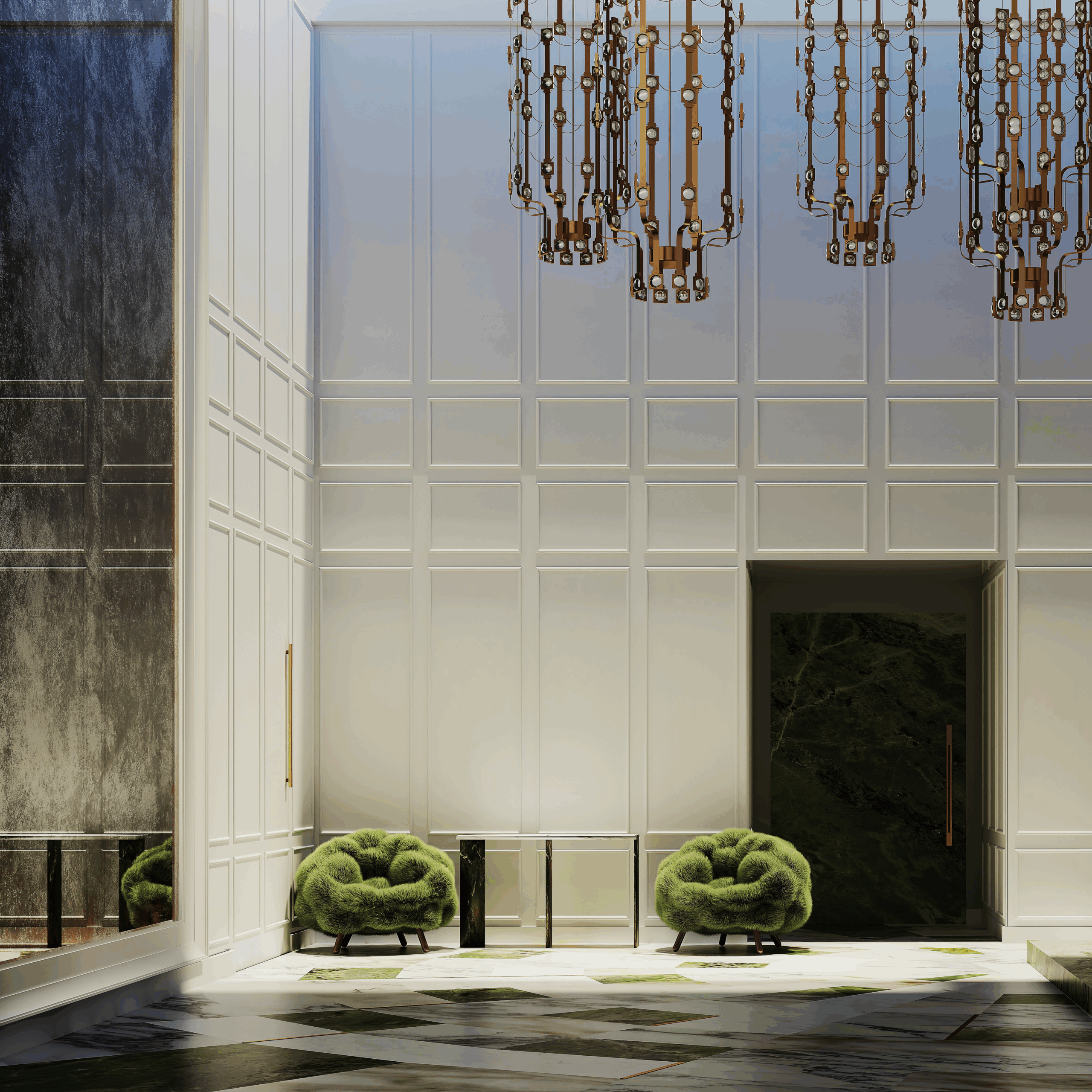
The entryway may be one of the most transient areas in a home, yet it still has the power to shape the emotional tone for everything that follows. It becomes the place where outside energy is either welcomed in or gently released, creating a quiet shift from public to private that you feel more than you register.
A wellness-focused entryway should slow you down in an easy, unforced way, using scale, materiality, and rhythm to create a moment of pause. You notice it in the way the light enters when the door opens and in how your body naturally softens as you move from exterior to interior.
At our Saadiyat Island residence, the entryway was crafted to feel grand without tipping into excess. The tall ceilings and patterned wall paneling create an architecture that feels like it breathes, while cascading bronze chandeliers guide the eye upward and bring a sculptural warmth overhead. Rich green stone grounds the palette at both the floor and the door, echoing the surrounding landscape beyond the villa. Tactile seating encourages a brief, natural pause so the transition inward feels smooth and unhurried. Every single detail ultimately works together to create a soft passage that gently releases the outside world before inviting you into calmer energy.
Subtle functionality becomes part of the sanctuary when it’s executed with grace. Integrated lighting can help regulate the nervous system by easing the transition from bright exterior light to a more soothing interior glow. Niches or custom built-ins can quietly accommodate daily rituals, whether it’s placing a favorite book, a travel-worn catchall, or an essential oil blend you reach for before heading out the door. A mirror or artwork can also help bring personality without overwhelming the entry, allowing it to feel purposeful rather than busy.
These small gestures, when intentionally embedded into the design, offer a sense of rhythm and calm that encourages you to slow down, settle in, and begin to feel at ease before you’ve even crossed fully into the home.
Wellness in design is not only about rest. It is also about ritual. The bathroom, when approached with true intention, becomes one of the most transformative spaces in a home because it supports the daily rhythms that bring clarity, cleansing, and calm. The spa comparison is useful, but it tells only part of the story. The goal is not to recreate a resort. The goal is to craft a personal environment that restores the senses and strengthens the rituals that anchor your day.
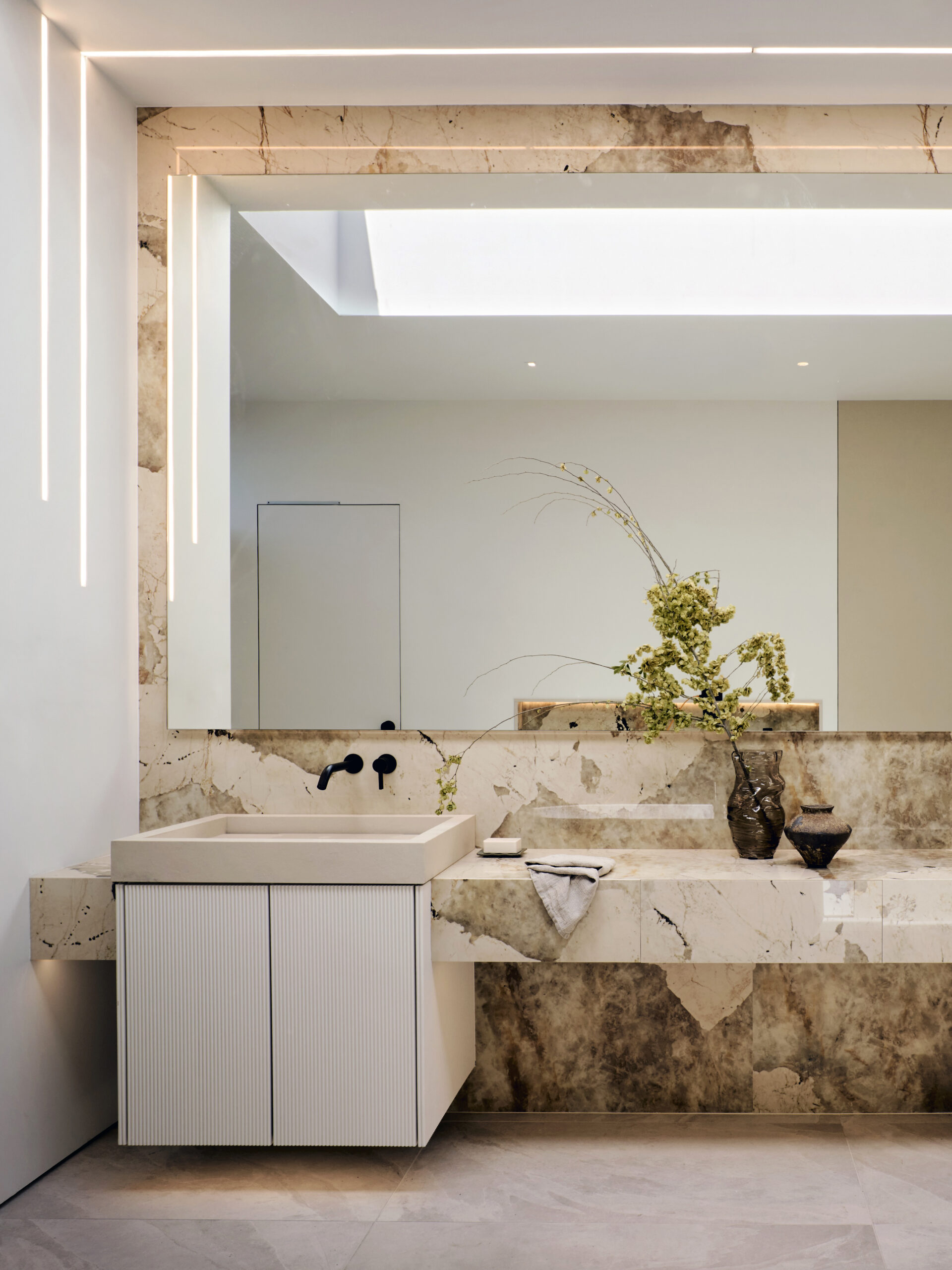
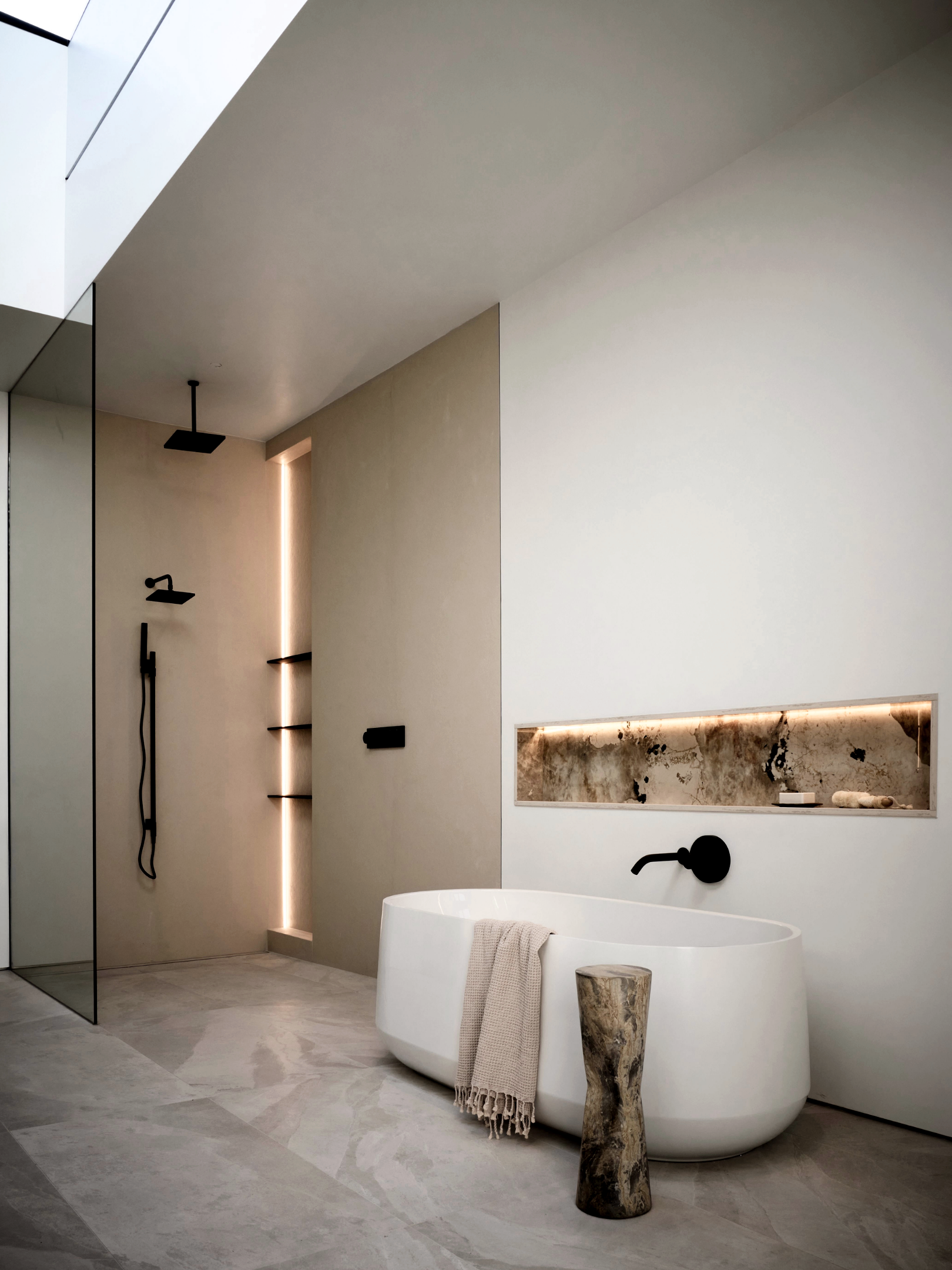
In the Los Angeles Hills residence, we designed a bathroom that functions as a complete wellness sanctuary, beginning the moment you step inside. The visual language is guided by serenity, with honed stone that softens the light and creates a natural diffusion across every surface. Floating vanities keep the space open and uninterrupted, and a full-height mirror expands the room without losing intimacy. Meanwhile, the shower and tub areas were shaped with movement in mind, allowing wide thresholds, minimal hardware, and concealed drains to maintain a sense of ease while encouraging a fluid path through the space.
Material choice carries significant weight in a bathroom. Surfaces that breathe, such as plaster, natural stone, or responsibly sourced wood, help regulate moisture and temperature, especially when paired with radiant heat or gentle water features. Aromatics and acoustics also deepen the experience. A room that smells clean, carries sound softly, and holds light in a warm, diffused way naturally supports the nervous system. When surfaces, sounds, and shadows work together, the bathroom becomes a space that clears both mind and body, allowing ritual to unfold in a way that feels grounding, restorative, and deeply personal.
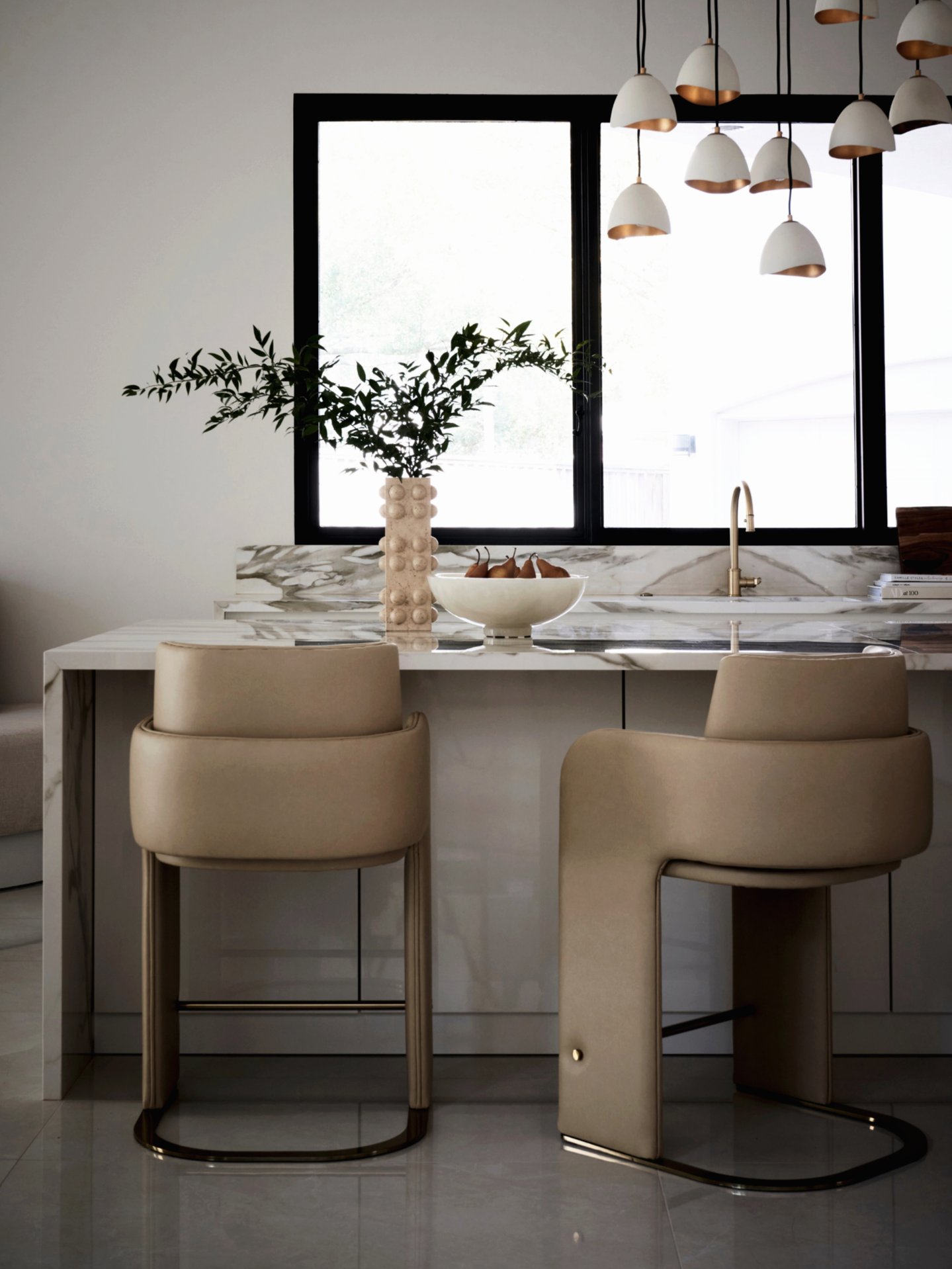
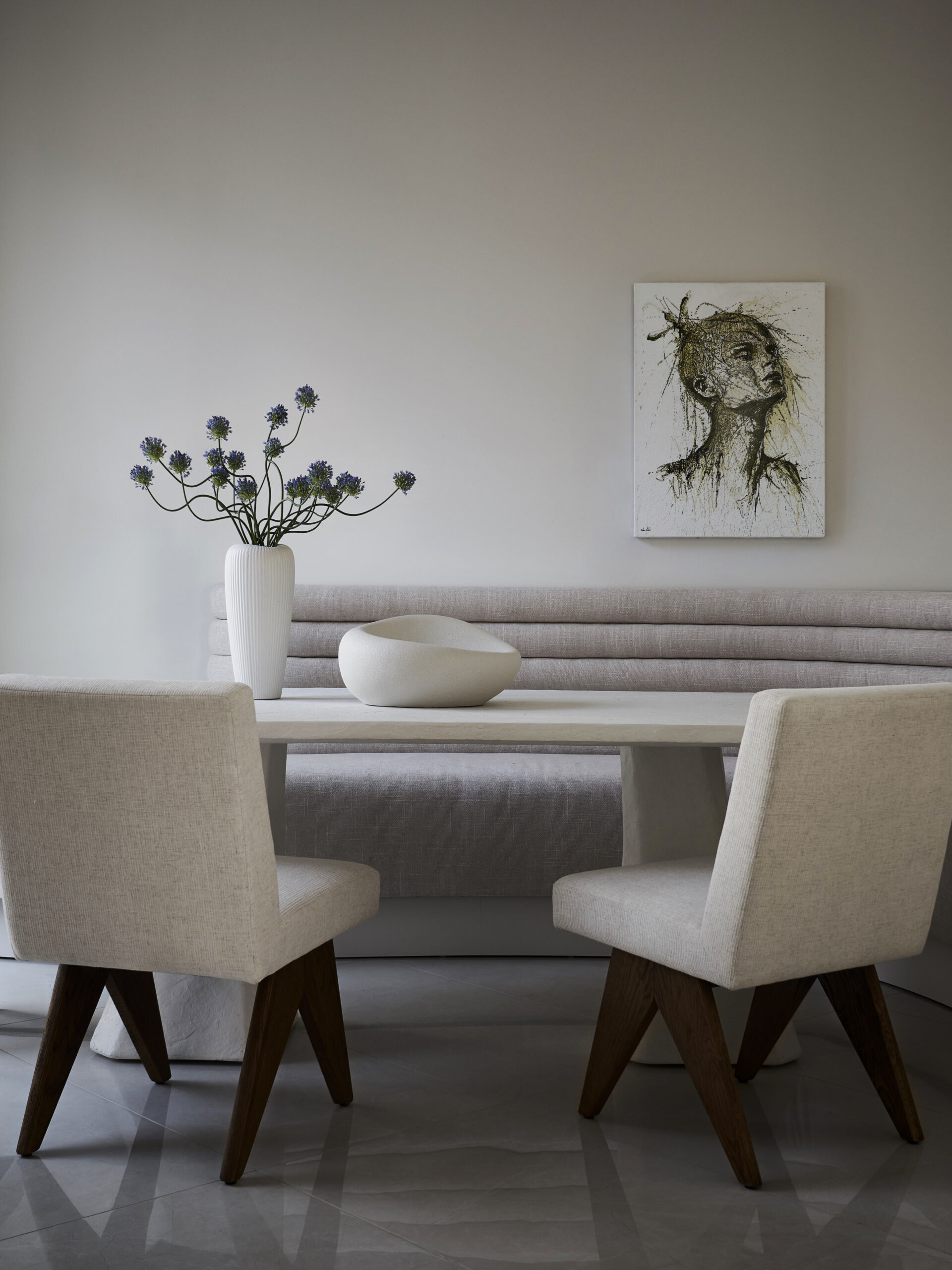
The kitchen has always been a heart space, yet in wellness-centered homes it becomes even more essential because it supports the daily rituals that tie nourishment, connection, and creativity together. Today’s kitchens are no longer separated by function. They are fluid environments that guide you through gathering, preparing, and sharing in a way that feels intuitive and calm.
In our Stablewood residence, the kitchen was designed to feel grounded and restorative, with matte cabinetry that balances the movement of the heavily veined stone and sculptural silhouettes that settle into the natural light throughout the day. Appliances were thoughtfully concealed so the visual language remained clean, allowing the space to feel open rather than interrupted. The island became the anchor, shaped for both hosting and everyday rhythms, with seating that feels sculptural and comfortable while still supporting the flow of work and conversation.
The breakfast area extends the kitchen experience, creating a quiet, welcoming corner where softer textures, curved seating, and minimal decor encourage slower moments throughout the day. It connects seamlessly to the kitchen so the transition between tasks, meals, and rest feels natural rather than segmented.
Wellness in the kitchen also depends on material choice and thoughtful engineering. Non-toxic finishes, efficient ventilation, and lighting that shifts with the time of day all create a healthier and more responsive environment. Storage is equally important. A calm countertop relies on systems that keep the unseen work organized, preventing visual clutter from becoming emotional clutter. When every detail is considered, the kitchen evolves into a space where making, sharing, and slowing down exist in complete harmony.
A living room should feel like the true center of a home, a place where people instinctively gather because the space itself invites connection. It brings together the people you share your days with and the guests who step into your world, creating an environment where conversations unfold easily and quiet moments feel equally supported. When it is designed with wellness in mind, the room becomes a setting where different energies can coexist, allowing the space to feel expansive when people gather and deeply calming when the day slows, so the environment adapts to whatever the moment calls for.
In Piney Point Village, we shaped the living room to carry this sense of fluidity, letting the grand arches open sightlines and invite light to move freely so the room feels generous without losing its softness. The custom sectional was created to feel sculptural while still encouraging people to settle in, which allows the room to hold group energy comfortably while offering enough ease for someone to sit alone and feel at home. As you move through the arches toward the dining area and into the kitchen and breakfast space beyond, the connection between rooms becomes part of the experience, allowing gatherings to expand naturally without breaking the calm that anchors the home.
Each material and object was chosen to support this rhythm, with textures that soften the architecture and surfaces that reflect just enough light to keep the room feeling alive without overwhelming it. When all of these elements work together, the living room becomes a place where people feel welcomed, supported, and at ease, no matter how many voices fill the space or how quiet the moment becomes.
All in all, home is never just a place to live. It is a place to feel whole. When every room is shaped with intention—supporting movement, stillness, texture, and breath—a deeper kind of comfort begins to unfold. That is the promise of a wellness sanctuary. A space that holds you in all your rhythms, that restores without announcing itself, and that reflects the truest expression of what it means to live well.
Because, in the end, luxury is not about what you can add, but about what you can feel.